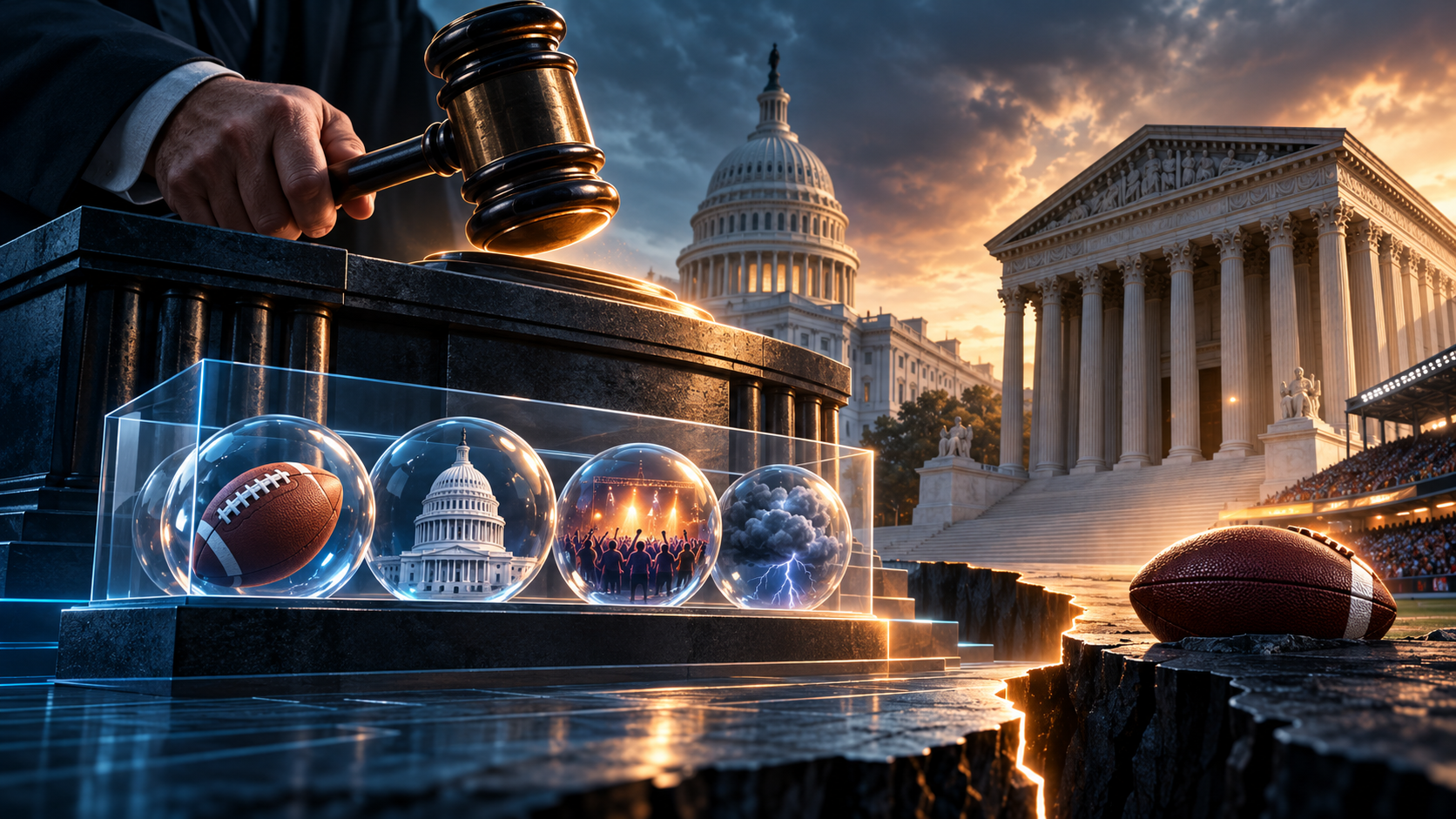
The biggest development is regulatory: the CFTC has proposed explicitly defining sports, political, cultural, and weather event contracts as swaps under its jurisdiction. As described in the Federal Register, the proposal would sharpen the federal agency’s claim over a broad range of contracts that sit at the center of the fast-growing prediction-market debate.
A clearer federal line
The Federal Register proposal matters because it could move a long-running jurisdictional argument toward a more explicit rule. Treating these contracts as swaps would frame them through the CFTC’s existing regulatory authority, rather than leaving the boundaries around event markets as contested or implied. For platforms, users, sports leagues, and state regulators, the key question is no longer simply whether prediction markets are expanding—it is which rulebook governs them.
Kalshi faces an integrity question
The Daily Beast reports that Kalshi deleted a post saying Tucker Carlson had an 87% chance of facing federal charges, even though the underlying market was showing odds of roughly 7%. The discrepancy raises a basic market-integrity issue: market probabilities are meaningful only if a platform’s public presentation accurately reflects the market it operates.
That does not turn one deleted post into a verdict on the platform or the contract. But it highlights the importance of clear probability displays, prompt corrections, and scrutiny of how odds are promoted outside the trading interface. As prediction markets seek wider legitimacy, communications controls can matter nearly as much as the mechanics of the market itself.
The NFL wants the Supreme Court to weigh in
AP News reports that the NFL has urged the Supreme Court to clarify whether states or the CFTC regulate sports-related prediction contracts. The league cited consumer- and game-integrity concerns, alongside $1.8 billion in first-Sunday trading volume.
The request puts sports contracts at the sharp end of the broader regulatory conflict. Sports betting has traditionally developed through state-by-state legalization and oversight, while federally regulated event contracts present a potentially different path. A clearer judicial answer could shape how platforms design products, where they can operate, and what protections apply to participants.
Why it matters
Taken together, these stories show an industry reaching a more consequential phase. Regulatory definitions, court jurisdiction, and platform-level trust are becoming central market variables—not just background legal debates. For anyone following Polymarket, Kalshi, and the wider prediction-market space, the next major shift may come less from a new contract than from the rules determining who can offer one and how confidently users can rely on the odds they see.